We have not personally tested the products mentioned below. This guide compares hair oil and hair masks as formats; for a product-to-product comparison, see our Fino vs TSUBAKI guide. Some links may be affiliate links; commissions do not affect what is included.
If your hair is dry, frizzy, or damaged, you’ve probably seen both “hair mask” and “hair oil” recommended as the fix, sometimes by the same brand, sometimes for the same product line. They’re not interchangeable, though, and understanding what each one actually does can save you from buying both when you only need one, or from expecting a rinse-out treatment to do a leave-in product’s job.
Two Different Jobs, Not Two Versions of the Same Thing
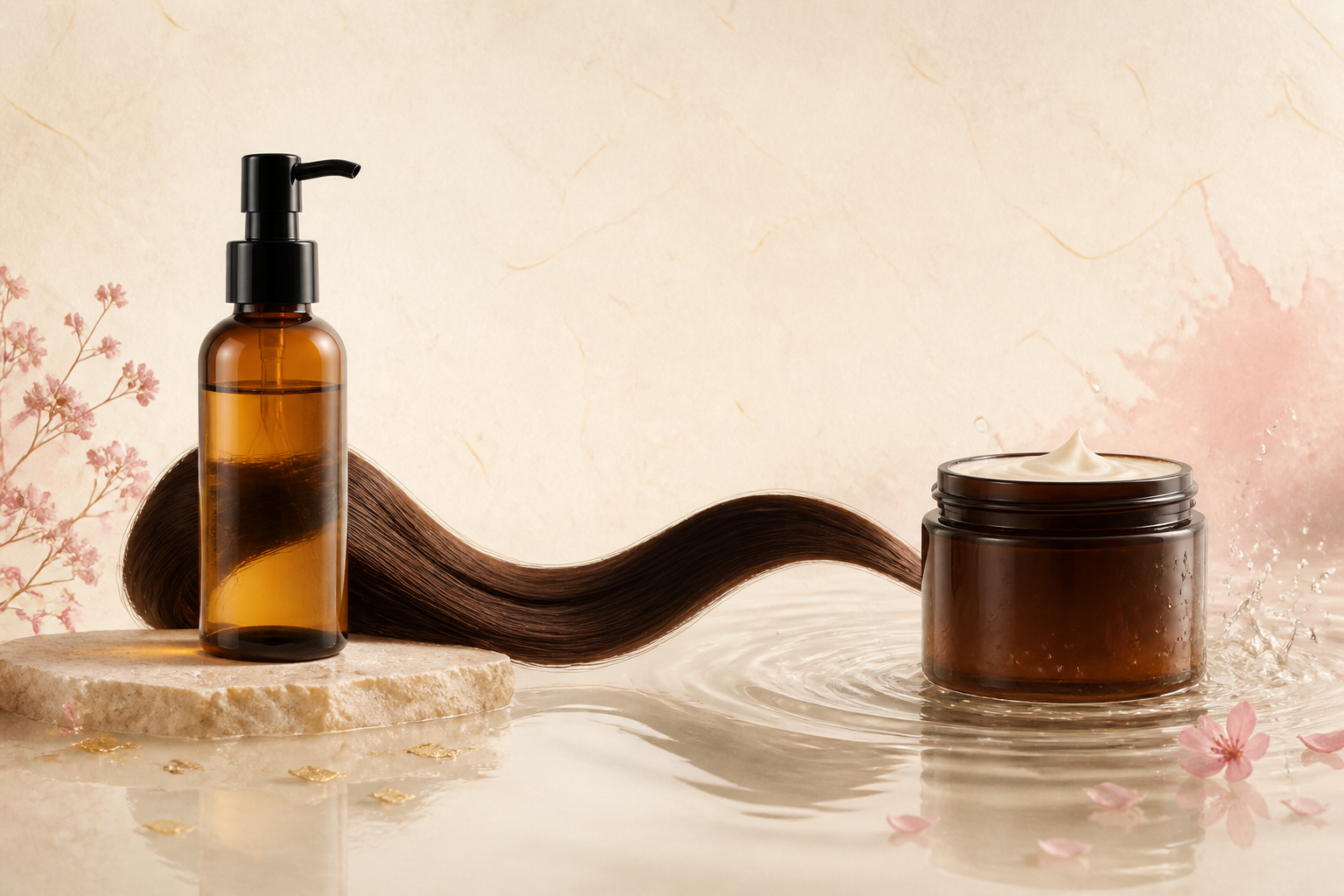
A hair mask is a rinse-out, in-shower treatment. You apply it to wet hair after shampooing, leave it on for a short time (or, per some brands, no time at all), and rinse it out before you towel-dry. It’s designed to condition the hair fiber while it’s saturated with water.
A hair oil, in the products we looked at, is a leave-in, out-of-shower product. It’s applied to towel-dried or fully dry hair and isn’t rinsed out at all. It’s designed to sit on the hair’s surface (and, depending on the oil, absorb into it somewhat) to smooth the cuticle, add slip, and reduce frizz for the rest of the day.
Put simply: a mask conditions from the inside of the wash cycle; an oil finishes and protects afterward. Many routines use both, at different points, rather than choosing one over the other.
A Concrete Example: Fino’s Mask and Oil, Side by Side
FineToday’s Fino line sells both formats, which makes it a useful real-world example. Fino’s Premium Touch Hair Mask (see our Fino Premium Touch Hair Mask review) is a rinse-out product: apply after shampooing, focus on damaged ends, rinse out, used one to two times a week per the brand’s instructions. Fino’s Premium Touch Rich Beauty Liquid Hair Oil is the leave-in counterpart: apply to towel-dried or fully dry hair, don’t rinse it out, and per the brand, it can be layered on dry hair later in the day for extra shine. The brand markets the oil with a “damage search” claim, aimed at detecting and treating specific damaged sections rather than coating hair evenly. We haven’t tested either product ourselves; this is what each is designed to do, per FineToday’s own product pages.
We’re using Fino’s pair as a concrete illustration of the category difference, not as a recommendation that its mask and oil are better than other brands’. TSUBAKI, for example, also sells a well-known rinse-out mask (see our TSUBAKI Premium Repair Mask review and our two-way Fino vs TSUBAKI comparison, or our broader hair mask roundup for a third option), but we haven’t researched leave-in oils from TSUBAKI or other brands for this article. The general mask-vs-oil guidance below applies regardless of which brand’s products you’re choosing between.
Choosing by Problem
Dry or Rough Ends
Both formats can help here, but they help differently. A mask adds moisture and conditioning agents while hair is open and saturated with water; an oil seals in moisture and smooths the surface afterward. If your ends are dry but not badly damaged, a leave-in oil alone, applied after washing, may be enough. If they’re rough and brittle, not just dry, a rinse-out mask that targets deeper conditioning is worth adding.
Frizz and Flyaways
This is where leave-in oil tends to do more of the visible work, since frizz is largely a surface and humidity issue, and an oil sits on the hair’s surface where it can smooth the cuticle and block some moisture absorption from the air. A mask can improve overall manageability, but it rinses away and won’t do anything for frizz that shows up hours after you’ve left the shower.
Bleached or Heat-Damaged Hair
This is the case where both formats are most commonly recommended together. A repair-focused mask (with ingredients like proteins or conditioning silicones) works on the hair while it’s saturated, and a leave-in oil protects the same compromised hair from friction and moisture loss for the rest of the day. Neither one reverses structural damage; both are cosmetic treatments that can make already-damaged hair look and feel better temporarily. For hair that’s significantly compromised, a stylist’s in-person assessment is more reliable than any product claim.
At a Glance
| Hair Mask (rinse-out) | Hair Oil (leave-in) | |
|---|---|---|
| When it’s used | During your shower, after shampoo | After towel-drying or on fully dry hair |
| Rinsed out? | Yes | No |
| Primary job | Conditions hair fiber while saturated with water | Smooths the surface, seals moisture, adds shine, protects through the day |
| Best fit for | Overall dryness, roughness, and (alongside oil) structural damage | Frizz, flyaways, and finishing/shine |
| Fino example | Premium Touch Hair Mask, ¥1,062–¥1,298 depending on size/version | Premium Touch Rich Beauty Liquid Hair Oil, ¥1,298 / 70 mL |
The Risk of Heaviness or Buildup
Leave-in oil is the format more likely to cause heaviness or a greasy look if you use too much or apply it too close to your roots, especially on fine or low-porosity hair that doesn’t absorb oil quickly. Starting with a small amount (Fino’s own instructions suggest roughly one pump for semi-long hair, adjusted for volume and damage) and focusing on ends rather than roots is the usual way to avoid that. Masks carry less of this risk since they’re rinsed out, but overuse (using a rich mask daily instead of the recommended one to two times a week) can still leave hair feeling coated for some people.
Who Should Check Carefully
Readers with fine, low-porosity, or already oily-at-the-roots hair should be cautious with leave-in oils and apply sparingly, working from mid-length to ends. Readers with a compromised or irritated scalp should focus product away from the scalp and consult a dermatologist if scalp symptoms persist, since this article covers hair fiber treatment, not scalp conditions.
Our Verdict
- Choose mask only if your main concern is overall dryness or roughness and you don’t mind that the effect fades over the following day.
- Choose oil only if frizz, flyaways, and finish are your main concern, and your hair isn’t also structurally damaged from bleach or heat.
- Choose both if you’re dealing with bleached or heat-damaged hair, or you want deep conditioning in the shower plus all-day frizz control afterward.
- Choose neither, for now, if your hair feels fine day-to-day and you’re shopping based on marketing rather than an actual problem, a lighter leave-in conditioner or no additional product may be all you need.
Frequently Asked Questions
Do I need both a hair mask and a hair oil?
Not necessarily. They solve different problems, so it depends on what you’re dealing with. For significant dryness or damage, many routines use both; for frizz alone, oil may be enough on its own.
Can I use hair oil on wet hair, or only dry hair?
That depends on the specific product’s instructions. Fino’s oil, for example, is designed for use on towel-dried or fully dry hair, per the brand, not soaking-wet hair. Check the product’s own directions, since formulas vary.
Will hair oil make fine hair look greasy?
It can, if you use too much or apply it too close to the roots. Starting with a small amount focused on the ends, and adjusting from there, is the general approach brands like Fino recommend.
Which one actually repairs damage, mask or oil?
Neither permanently repairs structurally damaged hair; both are cosmetic treatments that improve look and feel temporarily. A repair-focused mask works on the hair fiber during washing, and a leave-in oil protects it afterward, which is why both are often used together for significant damage.
Sources and limits
The product examples were checked against FineToday’s official Fino mask and hair oil pages. The article uses those products to illustrate the difference between a rinse-out mask and a leave-in oil; it is not another Fino-versus-TSUBAKI comparison. Neither product was hands-on tested for this article. Last checked August 13, 2026.
Comments