This article contains affiliate links. If you purchase through one of these links, we may earn a commission at no extra cost to you. This does not affect how we compare products.
Article research summary
- Research basis: Published-source how-to guidance based on official product directions and the site’s lotion research; this is not a clinical or hands-on test.
- Last verified: August 10, 2026
- Primary sources: Rohto official Hada Labo page, Kikumasamune official product page, Kikumasamune official online shop
- Additional sources: Hada Labo vs Kikumasamune comparison, Hada Labo review, Kikumasamune review
Editorial note: The routine guidance synthesizes official directions and documented product characteristics. It is general cosmetic guidance, not medical advice or a claim that one routine will suit every reader. Details we could not independently confirm are labeled in the article. Read our Editorial Policy and How We Research.
Updated August 13, 2026: Research labels and source links were added; the article’s conclusions were not changed.
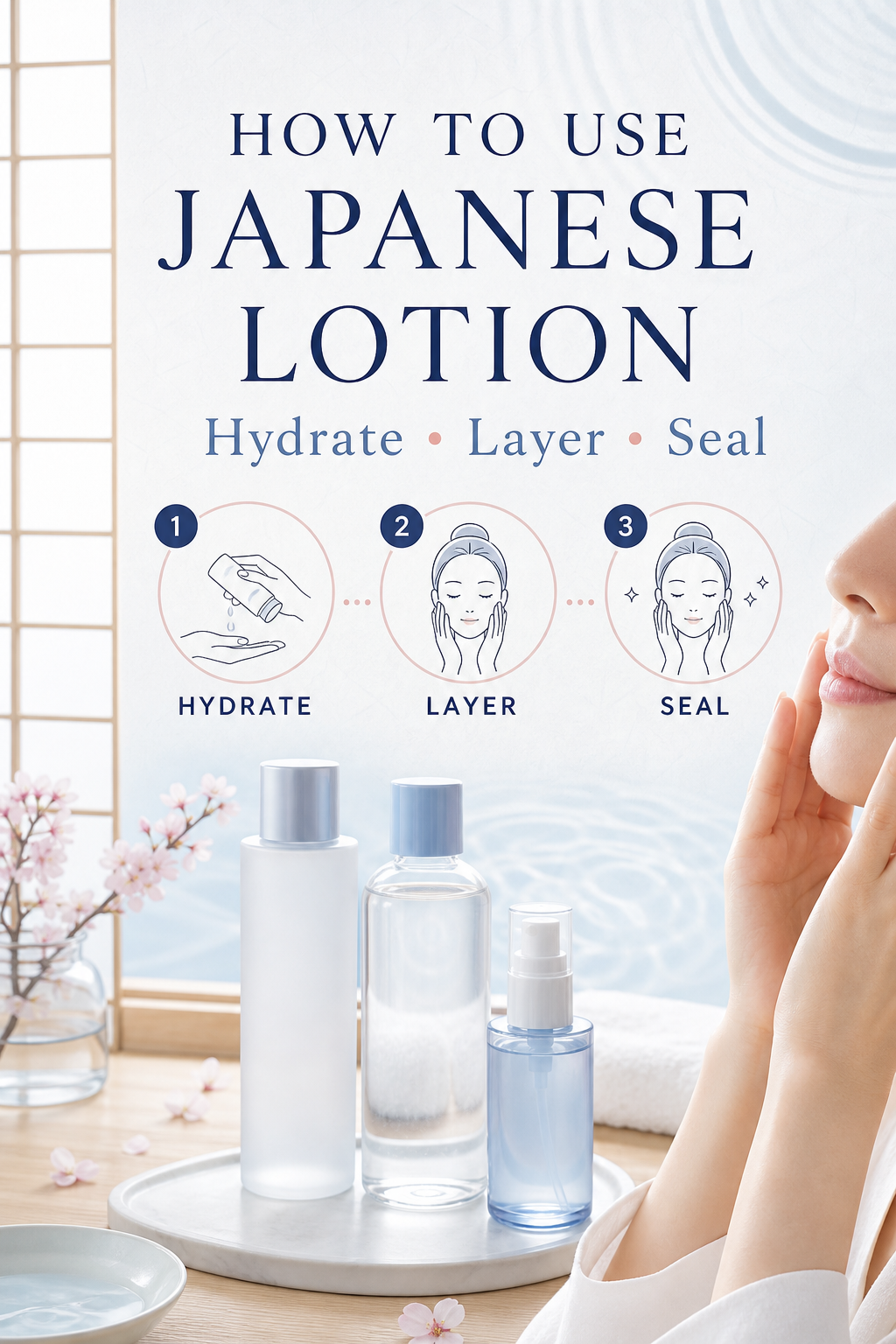
In Japanese skincare, the word “lotion” often refers to a watery hydrating step used after cleansing. It is closer to a hydrating toner or essence than to the thick body lotion many English-speaking shoppers expect. Hada Labo Gokujyun Premium Lotion and Kikumasamune Sake Skin Care Lotion High Moist are two popular examples.
Step 1: Cleanse Gently
Start with clean skin. Use lukewarm water and a cleanser that suits your skin, then pat away excess water without rubbing aggressively. A Japanese lotion is not intended to replace cleansing.
Step 2: Apply the Lotion
Dispense a small amount into clean hands and spread it gently over the face. Pressing with the palms can make a watery product easier to control than rubbing quickly. Follow the current package directions, because recommended quantities and packaging can change.
Step 3: Add Another Layer Only If Needed
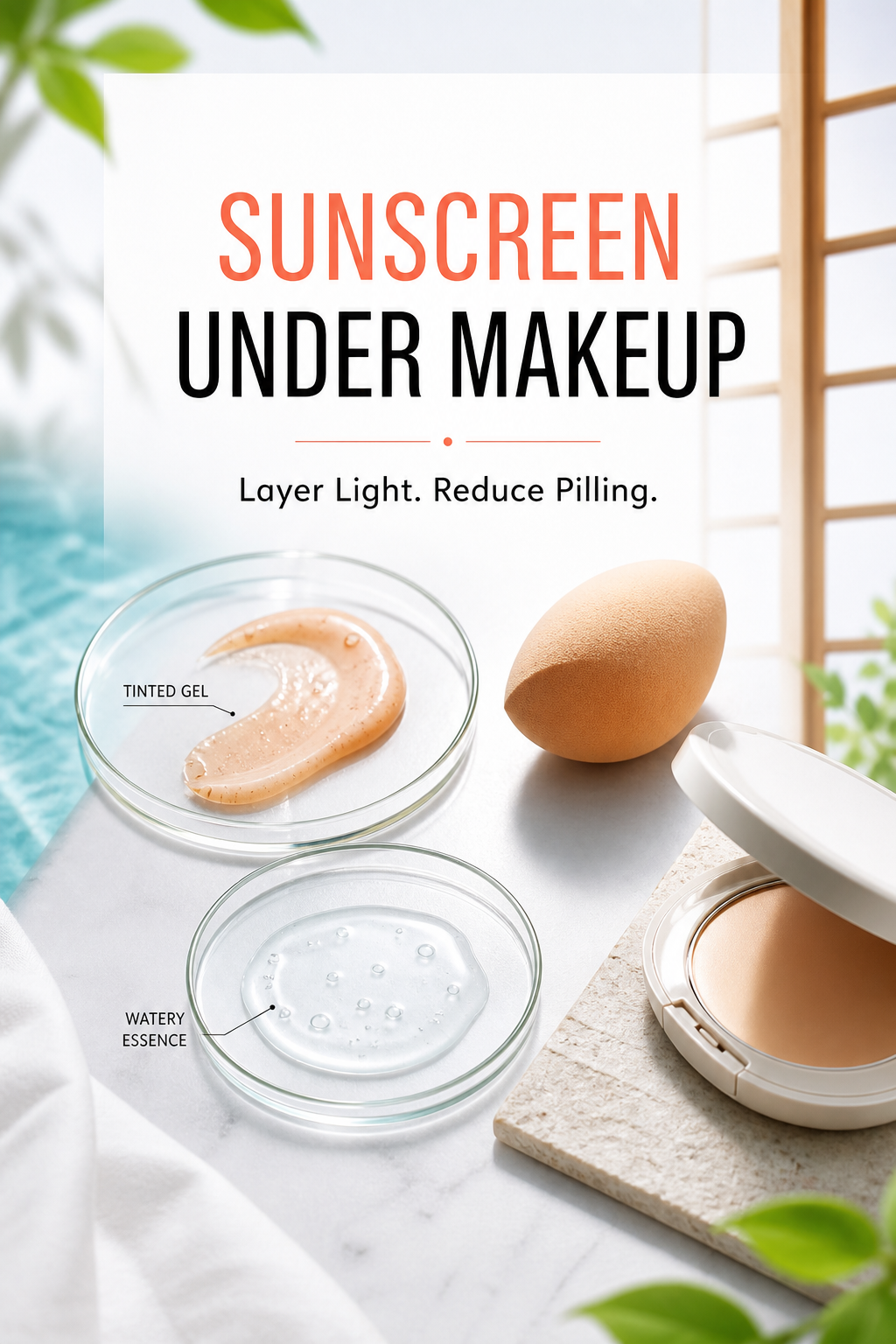
Some people prefer applying a second thin layer to areas that still feel dry. More product is not automatically better, and multiple layers can feel sticky under sunscreen or makeup. Start with one layer and adjust based on comfort.
Step 4: Seal With Moisturizer
Japanese lotion adds a hydrating step, but it is not necessarily a complete moisturizer. If your skin feels dry, follow with a cream or emulsion that helps reduce moisture loss. This is especially relevant in dry climates or during winter.
Step 5: Use Sunscreen in the Morning
Finish a morning routine with a properly labeled broad-spectrum sunscreen. Let each skincare layer settle before applying sunscreen and makeup to reduce excessive mixing or pilling.
Hada Labo or Kikumasamune?
Hada Labo Gokujyun Premium is the more compact option at 170 mL and is positioned around multiple forms of hyaluronic acid. Kikumasamune High Moist comes in a much larger 500 mL pump bottle and includes sake-derived ingredients, placenta extract, and arbutin in its product positioning. Ingredient presence does not guarantee a specific result.
Choose Hada Labo if you want a smaller bottle and a focused hyaluronic-acid-centered formula. Consider Kikumasamune if you want a high-volume product for face and body and are comfortable with its fragrance and ingredient list.
Common Mistakes
- Treating Japanese lotion as a cleanser.
- Applying many heavy layers immediately before makeup.
- Assuming “more hydrating” means suitable for every sensitive skin type.
- Ignoring fragrance, alcohol, or known allergens on the current ingredient label.
- Skipping moisturizer when skin still feels dry.
FAQ
Is Japanese lotion the same as body lotion? Usually not. In Japanese facial skincare, lotion commonly describes a watery hydrating step.
Do I use it before or after moisturizer? Use the watery lotion first, then follow with moisturizer if needed.
Can I use Japanese lotion twice a day? Many products are designed for regular use, but follow the package directions and reduce use if irritation occurs.
Can I apply it with cotton? Some lotions can be applied with hands or cotton. We did not verify a universal requirement for the products discussed, so follow the current package directions.
Does it replace sunscreen? No. A hydrating lotion does not replace sunscreen.
Sources
- Rohto official Hada Labo page — source used for product information or editorial context (verified August 10, 2026).
- Kikumasamune official product page — source used for product information or editorial context (verified August 10, 2026).
- Kikumasamune official online shop — source used for product information or editorial context (verified August 10, 2026).
- Hada Labo vs Kikumasamune comparison — source used for product information or editorial context (verified August 10, 2026).
- Hada Labo review — source used for product information or editorial context (verified August 10, 2026).
- Kikumasamune review — source used for product information or editorial context (verified August 10, 2026).
Comments